
We added Pi as an OpenRouter-backed coding-agent integration in Superconductor.
Pi is for teams that want to try OpenRouter-backed agents from the same place they already run the rest of their Superconductor implementations. Add an OpenRouter key in Project Settings or Workspace Settings, then launch Pi from the normal implementation flow alongside Claude Code, Codex, OpenCode, Grok Build, and the rest.
We like Pi for breadth. Some of these models are cheap, some are fast, and some are just interesting to keep in the mix. Superconductor gives you a practical way to test them on real tickets instead of guessing from public benchmarks.
That also makes Pi useful for benchmarking agents on your own codebase: you can see where newer frontier and open-weight models land on quality, time, and cost next to the agents you already use.
Available Models
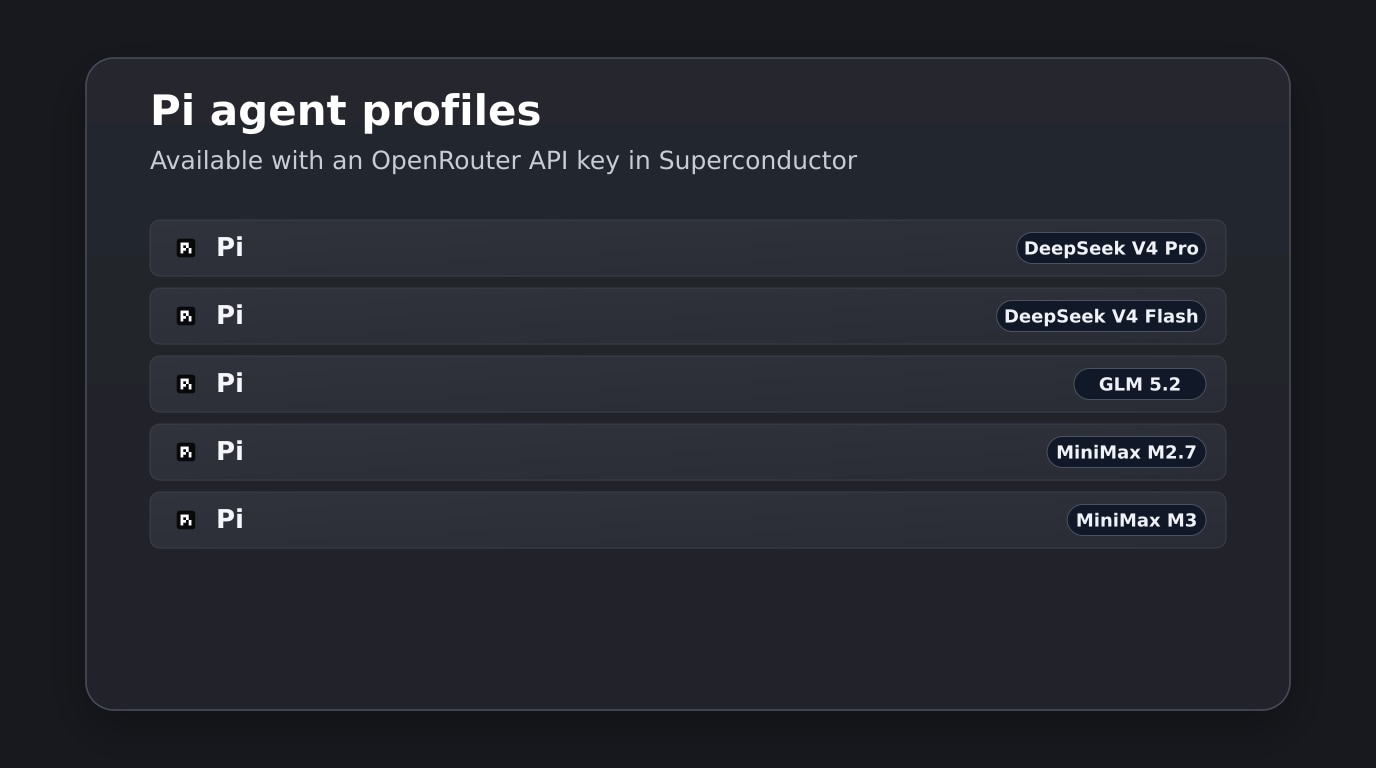
The Pi profiles include DeepSeek V4 Pro, DeepSeek V4 Flash, GLM 5.2, MiniMax M2.7, and MiniMax M3.
Benchmark
We ran Pi agents on a Personal SWE-Bench built from 12 ground-truth pull requests in Superconductor's Rails codebase.
The Pi profiles make the low-cost side of this benchmark more interesting. On Superconductor's Rails codebase, GLM 5.2 was the strongest Pi point in this run, while DeepSeek V4 Flash and the MiniMax profiles served as lower-cost comparison branches alongside the agents we already use.
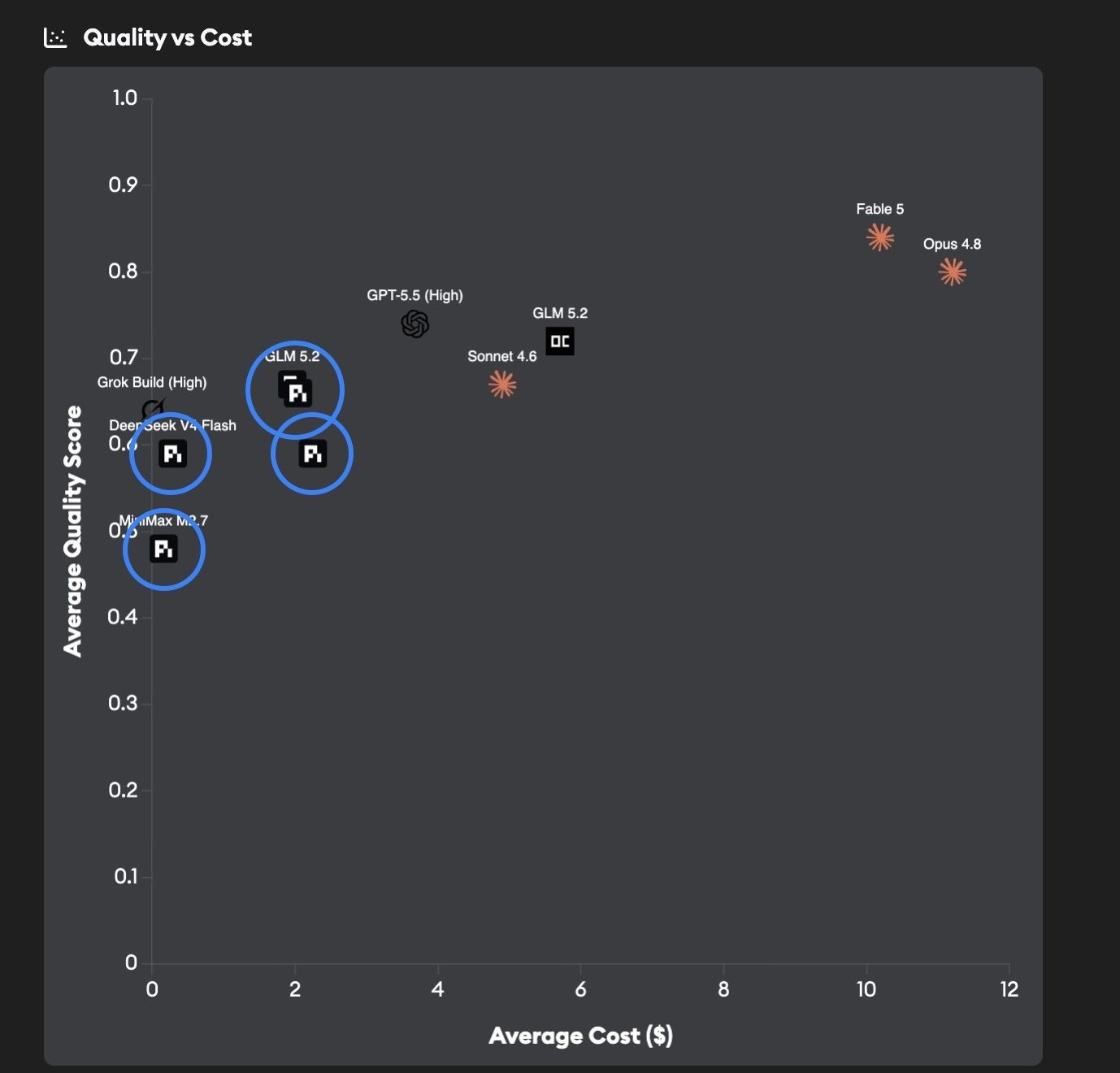
You can run the same kind of comparison on your own repo. Pick merged pull requests your team is proud of, run your agent pool against inferred versions of those tickets, and compare quality, time, and cost on work that actually looks like your work.
Are there any other coding agents you would like to try out in Superconductor? Let us know.